
Archbishop Hosam was the guest preacher at the Cathedral of St John the Divine, New York City on October 19th. His text from the Gospel of the day, from Luke chapter 18 was the Parable of the Persistent Widow. He described this persistence as equivalent to the Arabic term 'Sumud,' which has been exemplified by the staff at Al Ahli Hospital, by the people of Gaza and by those who have prayed for them.
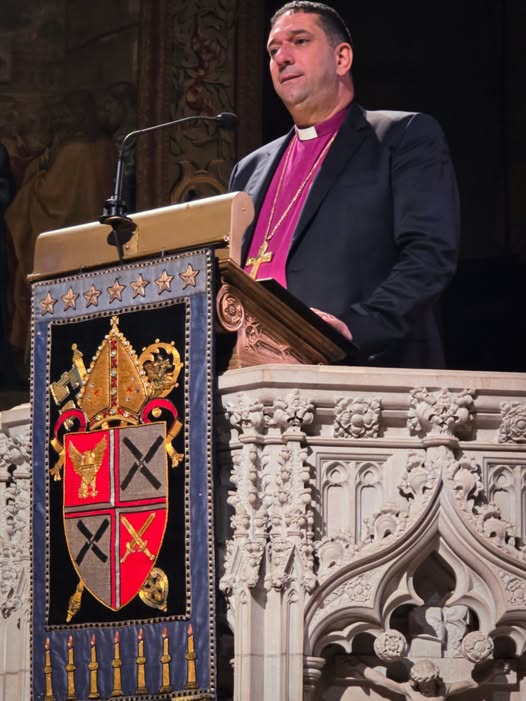
My dear brothers and sisters in Christ: Bishop Matthew, Dean Winnie, beloved clergy and people of this great Cathedral and the Diocese of New York—grace and peace be with you all.
It is a great joy to stand in this beautiful Cathedral, a place of prayer for all people. I bring you greetings from the entire Diocese of Jerusalem. We greet you from the City of the Resurrection, and we thank you deeply for your prayers and for the help you have given to our people, especially during the great suffering of the Gaza War.
These have been a lifeline for us over these past two years. Your solidarity is a powerful witness of the unifying Body of Christ—and it has given us strength each and every day.
By God’s providence, this morning’s Gospel speaks powerfully to our situation in the Holy Land. Our Lord’s words are stark and clear:
“Then Jesus told them a parable about their need to pray always and not to lose heart.” (Luke 18:1)
“...not to lose heart.”
This simple phrase is the main point of the Parable of the Persistent Widow. We meet three figures in this short story: the unjust judge, the persistent widow, and God Himself.
The judge was a corrupt man. He did not fear God or respect any person. On the other hand, the widow in his courtroom was weak. She had no power, no money—not even a living relative to speak on her behalf. Her only tool was her desperate need. And she expressed this need over and over again: “Grant me justice against my opponent.”
As we heard, after many days the judge finally gave into her plea—not because he was just, but because he was tired of her nagging. He said: “because this widow keeps bothering me, I will grant her justice, so that she may not come back and wear me out!”
Now, the miracle of this parable is not that the judge suddenly became righteous. On the contrary. The miracle is that even a corrupt person can be pushed to do the right thing by strong, never-ending persistence.
And this, my friends, is the essence of our hope. For if an unjust judge can be moved by sheer annoyance, how much more will the perfectly righteous and loving God grant justice to His people who cry out to Him night and day?
And so, this parable doesn’t tell us to annoy a God who doesn’t want to help. Instead, it serves to encourage us to trust that our prayers will be heard. Our God is always willing to act.
This call to unyielding persistence, this refusal to lose hope, is something we in the Holy Land deeply understand. We call this quality—this spiritual resilience—Sumud.
Sumud is the Palestinian concept of steadfastness. It is not a violent struggle. It is a quiet, active, and strong will to stay—to last and to live fairly in the land, even when life is very hard. It is the belief that perseverance itself is a form of powerful witness.
We see this Christian Sumud shown clearly in the constant work of Al-Ahli Arab Hospital in Gaza. This hospital, a beacon of hope run by the Diocese of Jerusalem, has faced great danger and suffering. Over the past two years, some of our staff have been killed. Some of them were imprisoned. Some of them lost their homes and loved ones.

And yet as a team they persevered. They continued to treat the wounded, comfort the grieving, and offer healing in the midst of constant death and destruction.
To work at Al-Ahli Hospital through the past two years shows the meaning of the Persistent Widow’s story. For in the face of this unjust suffering, they didn’t have the power of an earthly judge. They had only the quiet, unrelenting power of God’s grace.
This grace empowered them to return to their duties each day in order to offer mercy to those who cried out to them. This is a profound and living example of Sumud.
They kept working to heal people because they knew God wanted them to, and He strengthened them to do so.
During these same two years, we in the Diocese of Jerusalem, along with people from around the world, prayed for our staff and all the victims each day. We prayed for an end to the suffering and misery of the war.
And yet, after so many months, we almost began to lose hope that our prayers were being heard. Thousands of innocents continued to die. Millions were displaced. Children and innocents were beginning to starve. And hostages and prisoners were held in dark places.
Nevertheless, we remembered the lesson that our Lord taught in this parable. We knew that, like the persistent widow, we, too, must keep crying out. We, too, must pray always and not lose heart.
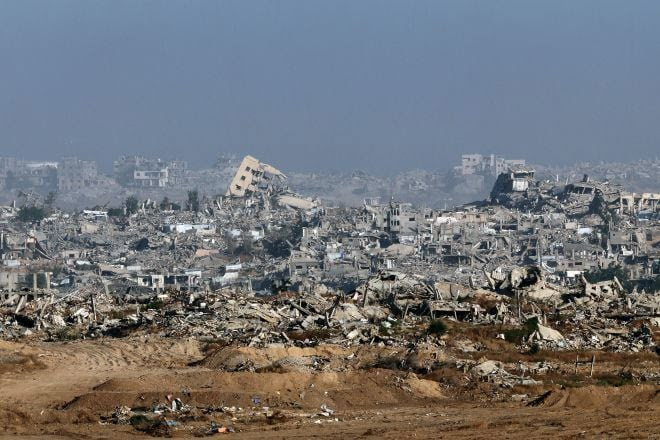
And then, it finally happened: last week the war came to an end. The bombing stopped. Captives and prisoners were released. Food and supplies surged into Gaza. People began to return to what remained of their homes.
Yet there is still much work to be done. Tons of rubble need to be cleared. Thousands of homes need be rebuilt. Just as importantly, trust between two peoples needs to be restored.
And so, we must continue to pray for justice and peace in our beloved Holy Land. We must continue to pray for homes and families and lives to be rebuilt. We must continue to pray for all people of good will—Jews, Christians, and Muslims—to discover the path of justice and peace. To learn, as our Lord taught, the meaning of being true neighbors to each other.
My friends, from this all we learn that the Parable of the Persistent Widow is not about if God will grant justice, but when. More importantly, it is about the kind of faith we must possess while we wait. It is a faith that calls us to a persistent, steadfast hope—to Sumud.
This Sumud will keep us anchored to the promise that justice is coming. God is indeed at work in the world about us—and He will surely vindicate His elect.
May our persistent prayers be matched by our persistent deeds. And may the example of those who refuse to lose heart, like the persistent widow, strengthen us all in our resolve to go and do the same. Amen.
If you would like to support the work of the Diocese of Jerusalem you can donate here