
6th January 2026 marks the fiftieth anniversary of the founding of the Anglican Episcopal Province of Jerusalem and the Middle East.
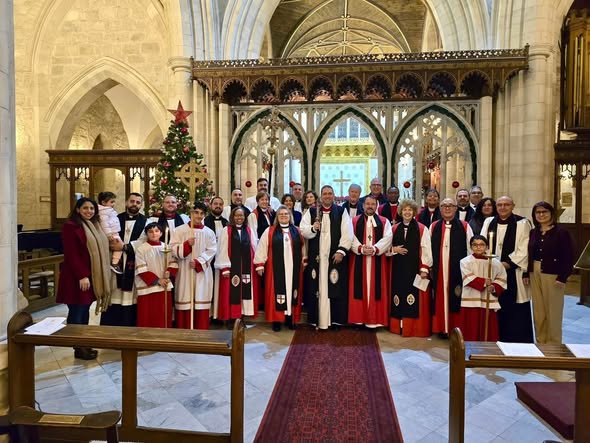
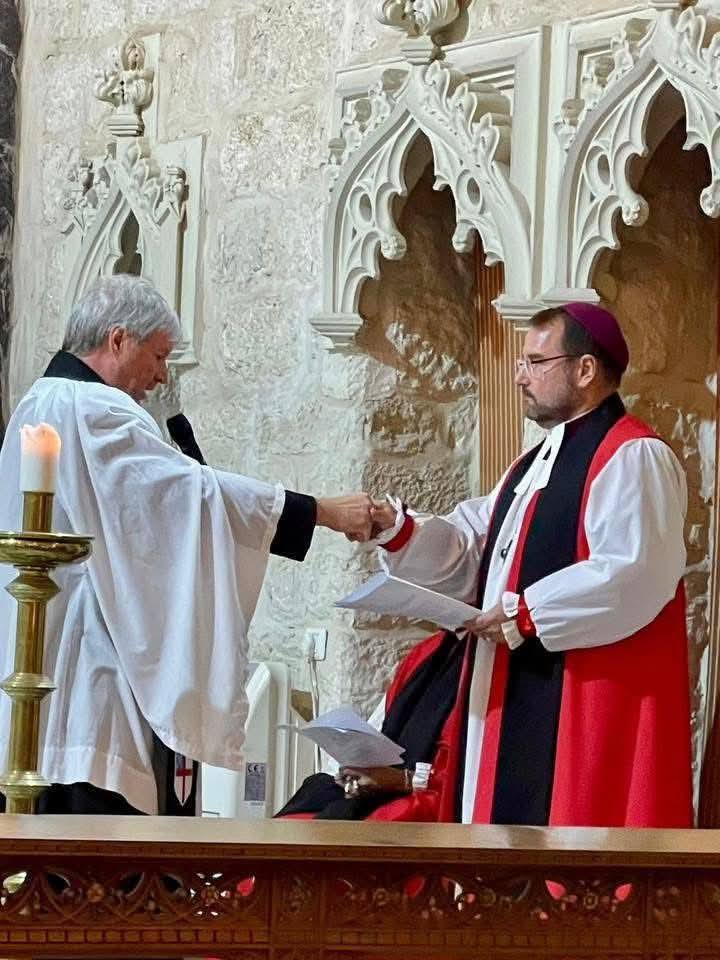
The Jubilee anniversary got off to a distinguished start on Sunday 4th at St George's Cathedral in Jerusalem at which the two serving Bishops in the present alignment of the Province were present, along with seven Bishops from The Episcopal Church of the USA who were there on pilgrimage. Bishop Sean of Cyprus and the Gulf was installed as an Episcopal Canon of the Cathedral by Archbishop Hosam. He was escorted to his stall of Mount Tabor by the Archbishop's Chaplain, Canon Dr Don Binder.
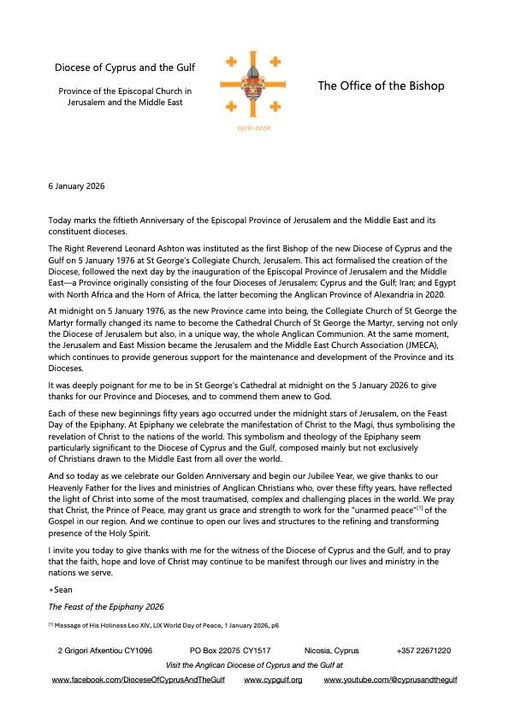
In the immediate aftermath of the occasion Bishop Sean issued the following message.
Later this month, the Diocese of Cyprus and the Gulf will have its own first celebration during the last weekend in January with services at All Hallows and St Clement Danes in London, both of which have a special connection with the Diocese.
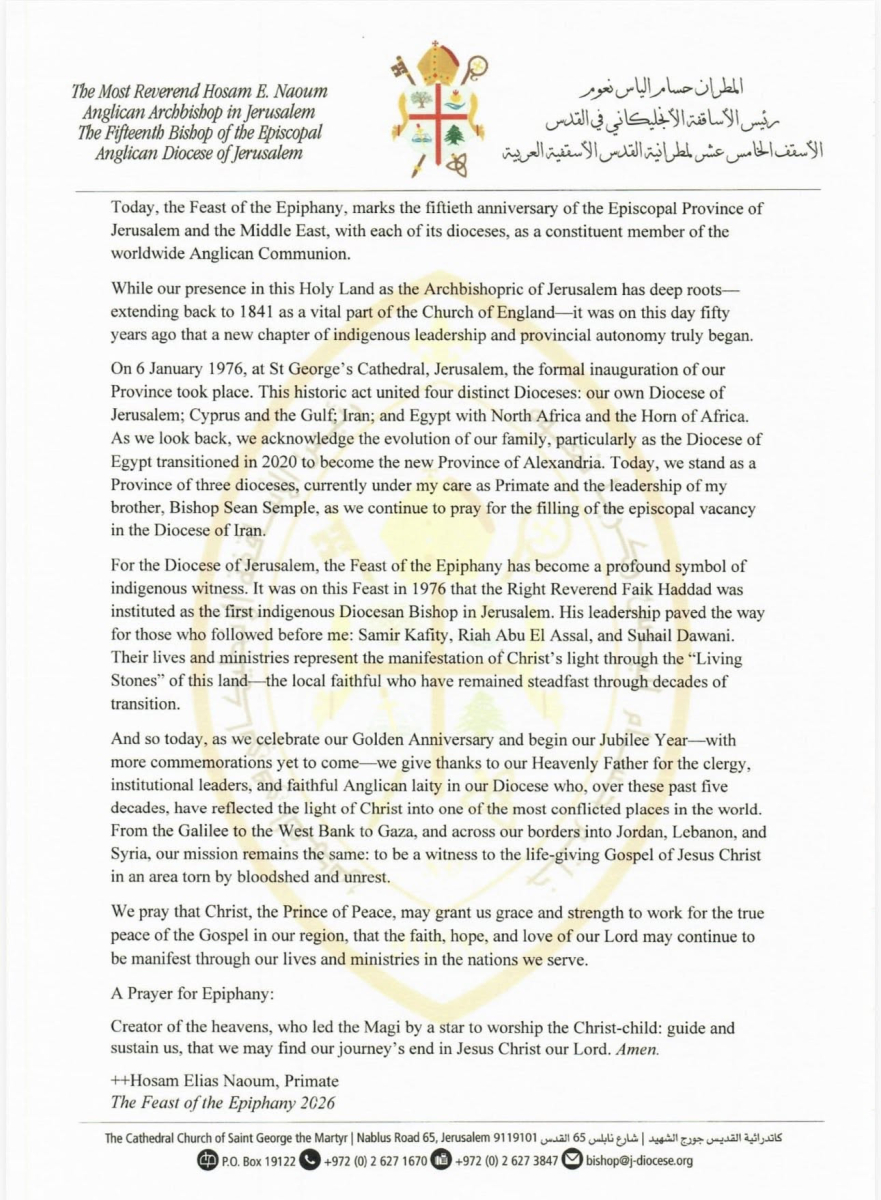
Archbishop Hosam has also marked the occasion with a special message.
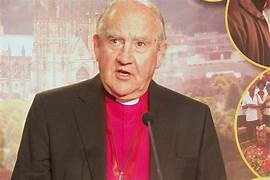
Bishop Clive Handford, a former Presiding Bishop in the Province, and Bishop of Cyprus and the Gulf, who had served in Lebanon and Baghdad before his appointment as Dean of St George's in 1974 was present at the inauguration service in 1976. We have invited him to set the scene for this important year in the life of the Province with a reflection on its past. He writes:
"The formation of the new province was the culmination of discussions which had taken place over a number of years, in part beginning with the establishment of the Archbishopric in Jerusalem in 1957 and the foundation of the Diocese of Jordan, Lebanon and Syria on 6th January 1958 with the first Arab Anglican Bishop, Najib Cuba'in. The movement towards local leadership of the Church was further marked by the Consecration of Hassan Dehqani-Tafti as Bishop in Iran in 1961. When George Appleton succeeded Campbell MacInnes as Archbishop, he soon realised the understandable desire of the Arab members of the Church to exercise leadership. General approval of a new Province was given by the Anglican Consultative Council in July 1973. However, decisions needed to be embodied in constitutions. Until this happened, the Archbishop of Canterbury could not relinquish his metropolitical authority to the new body. Accordingly, he invited Bishop Robert Stopford, recently retired as Bishop of London, to be Vicar General for a period of up to two years with the express purpose of establishing constitutions.
Bishop Stopford arrived in Jerusalem on 5th April 1974 and immediately began consultations across the area of the Archbishopric. One result was the withdrawal of the Diocese of the Sudan in order to begin the process leading to the establishing of a new province. Careful listening and discussion in visits across the whole region resulted in the making of constitutions, more or less in line with agreements already achieved. Three important events in 1974, following consultation with the Archbishop of Canterbury followed.
These were the consecration of three new bishops, all from the local communities. In August, Canon Faik Haddad and the Reverend 'Aql 'Aql were consecrated in Saint George's Cathedral. Bishop Haddad was appointed Co-adjutor Bishop, designated therefore as the next Bishop in Jerusalem and Bishop 'Aql to serve as Assistant Bishop, based in Amman. Sadly, Bishop 'Aql died before the new province was inaugurated. On All Saint's Day 1974, Archdeacon Ishaq Musaad was consecrated in Cairo as Bishop in the Diocese of Egypt. On 5th January, the Diocese of Cyprus and the Gulf was formerly inaugurated. Bishop Leonard Ashton, former Chaplain-in-Chief of the Royal Air Force and since 1974 an Assistant Bishop in Jerusalem became Bishop in Cyprus and the Gulf. On the morning of 6th January 1976, the Province of the Episcopal Church in Jerusalem and the Middle East was officially established. Immediately afterwards,
Bishop Faik Haddad was installed as Bishop in Jerusalem. Saint George's Cathedral was filled to overflowing with diplomatic and ecumenical representatives in addition to faithful members of the church including 80 from Amman.Next morning, those who had been elected or appointed as members of the Central Synod, as the new provincial governing body was called, made their way to Amman for its inaugural meeting. In elections, Bishop Hassan Dehqani-Tafti of Iran was elected as Bishop President, the Venerable Samir Kafity as Secretary and Mr. Ibrahim (Abe) Wakid from Egypt as Treasurer. In a move unusual but not unique in the Anglican Communion, the Central Synod, rather than an individual became the metropolitical authority.
Two other details are worth noting. Saint George's Cathedral to this point had always been known formerly as “The Collegiate Church of Saint George the Martyr”. Now it became officially “Saint George's Cathedral”, for the first time having its own constitution. This recognised its dual role as the Cathedral of the Diocese and also as representing the wider Anglican Communion. A symbol of this wider representation is the presence in the Cathedral of seats for Episcopal Canons who represent both the other three Dioceses and also the wider Communion. At Evensong on the Inauguration day, three episcopal canons were installed: Bishop Leonard Ashton of Cyprus and the Gulf, Bishop Hassan Dehqani-Tafti of Iran and Bishop John Howe, General Secretary of the Anglican Consultative Council.
The other significant change was that the Jerusalem and the East Mission became the Jerusalem and the Middle East Church Association, reflecting sensitivity to the religious makeup of the Middle East."
So JMECA is also, in a sense, celebrating its inauguration. It continues under its present Chair, Rev'd David Longe, to support the work of the entire Province (now including also the Province of Alexandria) and to tell its stories.
David himself has been reflecting on the significance of the occasion.
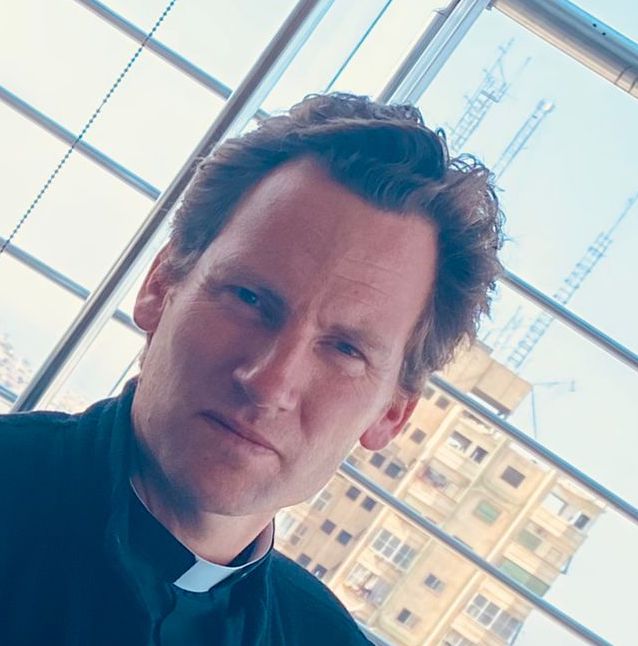 The new Province was ‘birthed’ in the context of a Eucharist held at St George’s Cathedral, Jerusalem on this Feast Day in 1976, and this led to other significant landmarks in the life of the Anglican Church in the Middle East.
Shortly afterwards, Bishop Faik Haddad was installed as the first Palestinian Anglican Bishop in Jerusalem; the previous evening, Bishop Len Ashton had been invested as the first Bishop of the new Diocese of Cyprus and the Gulf. The following day, travelling over the River Jordan, the Central Synod of the new Province met in Amman, and elected Bishop Hassan Dehqani-Tafti, the first Iranian Bishop in Iran, to become the first Bishop President of the new Province. (Anglican Bishops in the Middle East are often “in” their Diocese out of respect for the ancient churches.)
I commend to you the article by Bishop Guli Francis-Dehqani, daughter of Bishop Hassan, who shares her reflections on what this new role meant for her father. I also commend an article by Bishop Clive Handford in which he reflects on the service that he oversaw as the then Dean of St George’s Cathedral.
The Central Synod met in Amman rather than Jerusalem because some clergy and laity were unable to travel to Jerusalem due to travel restrictions. Sadly, for political reasons, Bishop Ishaq Musaad, Bishop in Egypt, was unable to be present at either the service or the Synod.
This is an example of how - from its very inception - the Province has had to circumnavigate the political, religious, and geographical hurdles of the Middle East in order to carry out its mission and ministry. It is often difficult for those outside the Middle East to understand the difficulties imposed particularly on the indigenous populations, as boundaries and restrictions often shift month-by-month, as we have seen particularly in recent years.
The Jerusalem and Middle East Church Association (JMECA) has had the privilege of supporting this unique Province since its inception. Our support has taken various forms: financial aid, care for the historic buildings owned by the various Dioceses of the Province, and encouragement to Anglicans in England and the British Isles to pray for and to cherish the life and witness of our brothers and sisters who express their faith in the midst the turmoil and maelstrom that has characterised many countries of the Middle East during the last 50 years.
This Feast also marks the 50th anniversary of JMECA in its present format. Until that time, the organisation was known as the Jerusalem and East Mission. Its new name, and new structure, marked a changed relationship with the Anglican Churches of the Middle East. No longer did JMECA see itself as engaging in ‘mission to’ Anglican Christians in the region; rather, it saw itself as being in ‘partnership with’ them. This partnership manifests itself through unwavering support for our Anglican sisters and brothers, and the wider community, in the Middle East: it is our raison d’être.
There is a deep rightness in the fact that this new Province was inaugurated on the Feast of the Epiphany. Of all the feasts in the Anglican calendar it beckons us, in recalling the journey of those courageous Magi, to recognise the truth that - from its very beginning - our Christian faith unites the inhabitants of the Holy Land with the wider Middle East, and those who have travelled, and continue to travel, from afar to glimpse the strange and sometimes painful glory that God has bequeathed to this region.