
In February, the Diocese in Europe’s Ministry Experience Scheme (MES) programme brought together seven interns from different chaplaincies across the continent for a pilgrimage to Cyprus, led by Dr. Clare Amos. The group have in common that they are discerning vocations. One of the group was Noura Eid, a former student at NEST where she was a participant in the first Cyprus and Gulf Diocesan Learning Community Summer School. Here she shares her reflections on the pilgrimage visit.
Over seven days, we journeyed across the island, beginning in Larnaca and travelling through Nicosia, Famagusta, the Troodos Mountains, Paphos, Latchi, and finally Kourion. Along the way, we visited various ancient churches, mosques, and Graeco-Roman archaeological sites. Each place bearing witness to the many layers of Cyprus’s long and complex history.
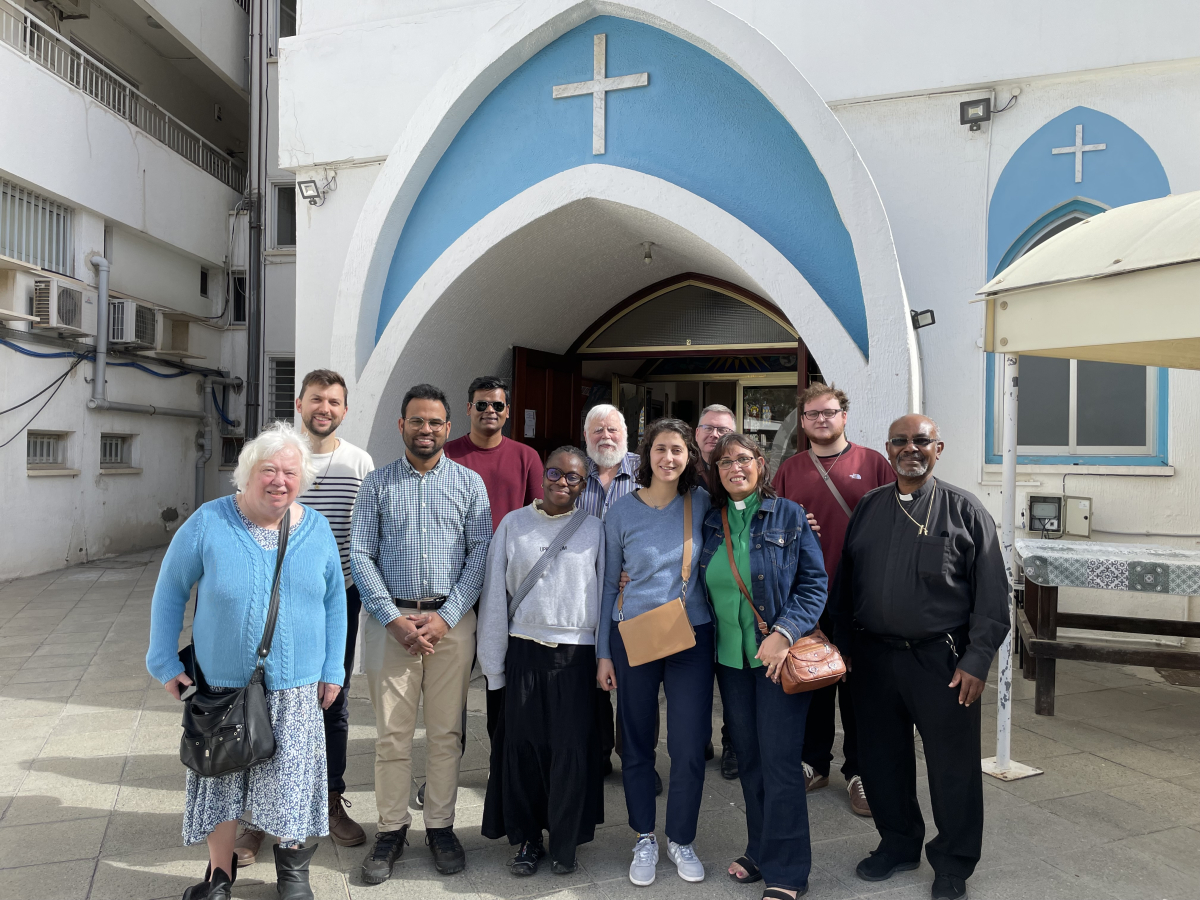
We worshipped on Sunday at St Helena’s Anglican Church, prayed the Morning Office at St Paul’s Anglican Cathedral in Nicosia, and celebrated the Eucharist at Ayia Kyriaki in Paphos. Ayia Kyriaki is an Orthodox church built over what is traditionally known as the pillar where St Paul’s was flogged. Moving between Christian traditions and centuries, we experienced something of the richness and breadth of the Christian story as it has unfolded on this island. I personally stood in awe of the truth that as a Christian I am part of a bigger and truer story than my own – God’s story of love and reconciliation.
This trip was not my first visit to Cyprus. My husband and I had spent time there on our honeymoon two years ago. Yet this pilgrimage allowed me to cultivate a deeper appreciation for Cyprus and for the work God has done in and through it. Its significance for the Church especially the early Church is profound. Cyprus is indeed holy ground in its own right. Historically and biblically, the island stands as a bridge between the Palestinian Jewish and Semitic context in which the story of Jesus was born and the Gentile Graeco-Roman world into which the Gospel rapidly spread. Acts 13 recounts how Saul, whose name changes to Paul in Cyprus, and Cyprus’s patron saint, Barnabas, sailed to the island and travelled across it proclaiming the good news of Jesus Christ. Their missionary journey from Salamis to Paphos was instrumental in the early Church’s outward movement toward the nations.
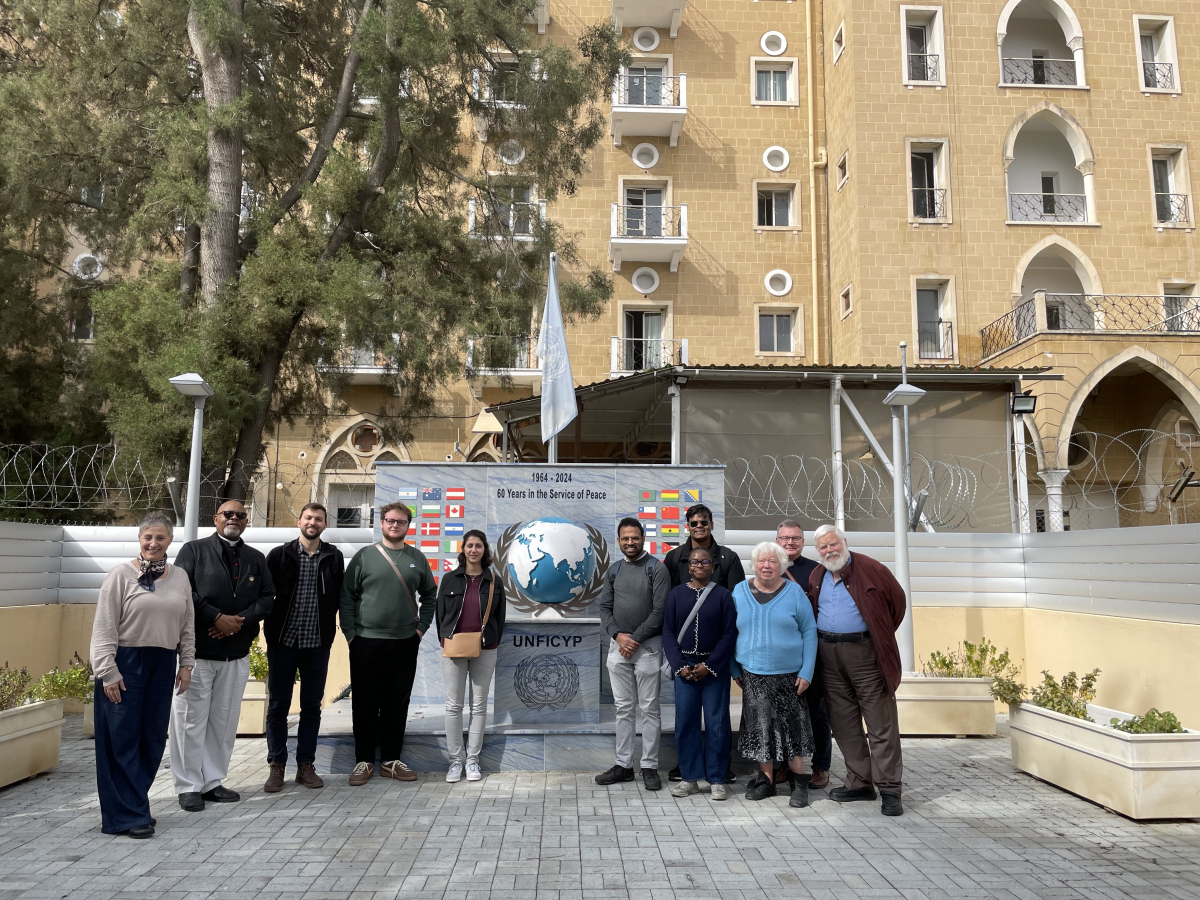
Every church we visited whether ancient or modern, Cypriot Orthodox or Anglican spoke volumes about faithful witness across the centuries. And yet, alongside Cyprus’s Mediterranean beauty, winter sunshine, gentle cold, delicious food, and generous and hospitable people, the Green Line dividing the Greek and Turkish parts of the island stands as a visible and daily reminder of separation and the acute need for forgiveness, healing, and reconciliation.
Cyprus is a fascinating little country where beauty and open wounds exist side by side. It is a place whose story was transformed by the Gospel. It is my prayer that the country and people of Cyprus may continue to experience God’s transforming work in and among themselves.
Picture credits: Noura Eid