
When I last visited St Raphael’s School in Cairo, run by the Diocese of Egypt for Sudanese refugees, two years ago, the head teacher, Mr Helmi said that they were hoping to move to new, bigger premises soon. That move has now taken place and I am looking forward to seeing the new school.
In fact, this tall but narrow building houses not only a school, but also a Community Centre. All the buildings in this poor part of the city are tall and narrow. The streets between them are also narrow, unsurfaced, uneven, and consequently dark. It’s only walking distance to a club with a sports field, and class by class the school is allowed to go and play there each week. The distance in quality of life is much more than walking distance, but St Raphaels is working to cover the ground for their pupils.
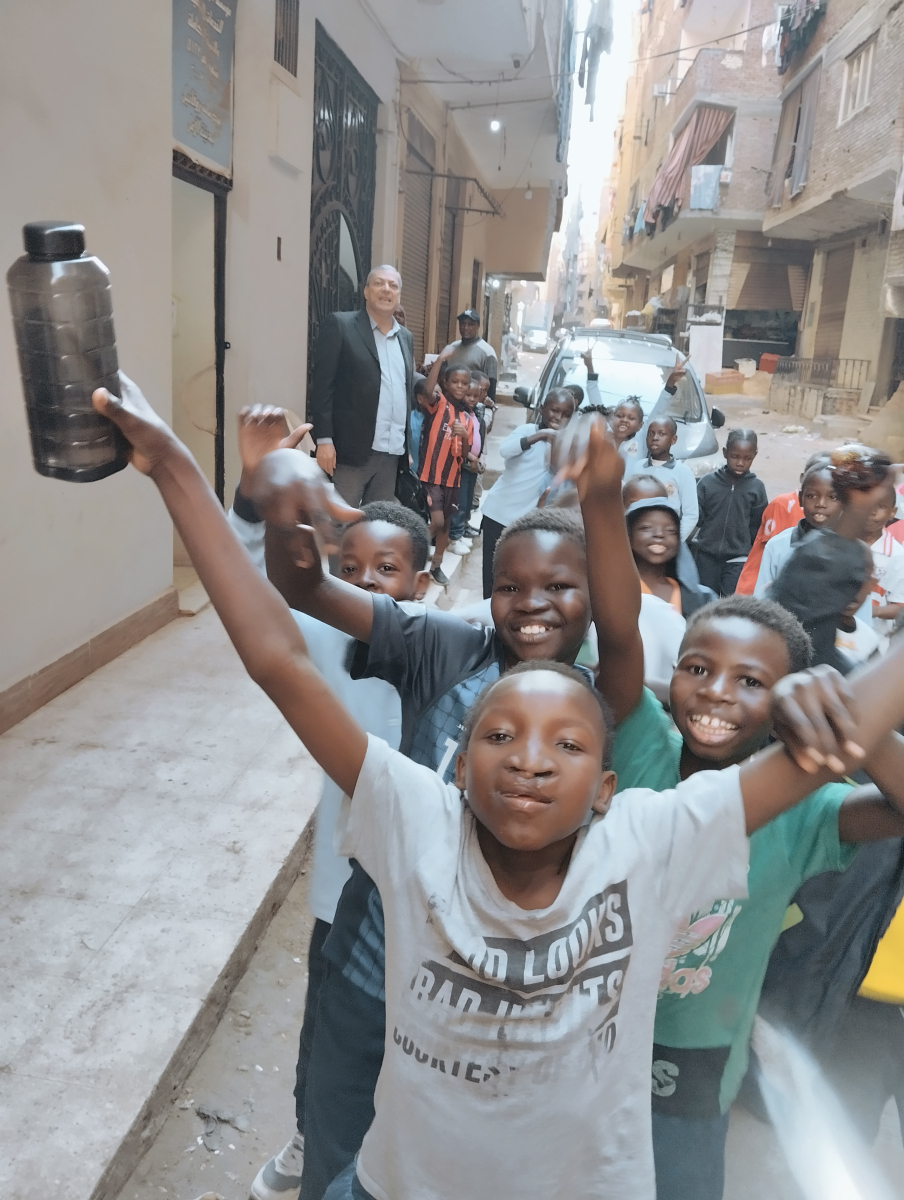
The UN have documented 300, 000 Sudanese refugees in this city. Anecdotally most people will tell you the actual figure is around eight million. Many families reach here with only one adult, usually a mother. Many people live crowded together, sometimes in a single room where luxury means having a curtain for your toilet bucket.
The new school, by contrast, is bright and clean, with good quality flush toilets. A friendly embassy has just contributed sufficient funds to completely upgrade the kitchen which already provides breakfasts and some other meals to children who would otherwise go hungry. The kitchen is on the very top floor, which seemed strange until I realised that it presented the greatest fire risk, and that if a fire started on a lower floor there would be no chance of escape.
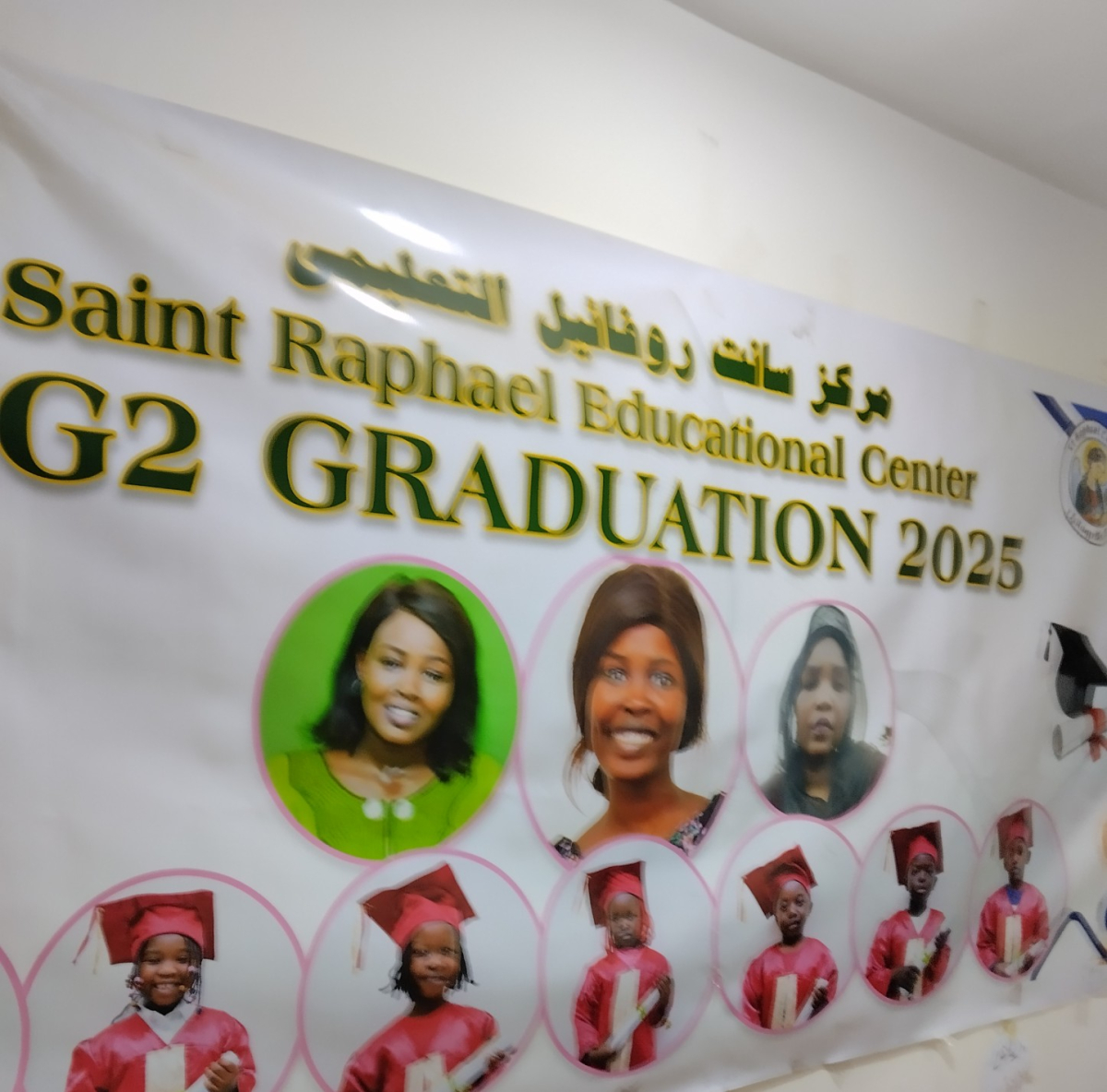 As we have reported before, the school offers exams according to the Sudanese curriculum, supervised by the Sudanese Embassy in Cairo, which can give access to university. An honours board is beginning to fill up in the new building. There are 150 students here, a mix of Muslim and Christian. All the staff are Christian. The students appear relaxed and happy to see visitors – especially (as far as the boys are concerned), from the home of the Premier League. There is obvious fun as I swop some banter with a Chelsea fan eager to showcase his command of English. An English literature class is following a set book. It turns out to be Hard Times by Charles Dickens; a strange, difficult but ironically apt choice.
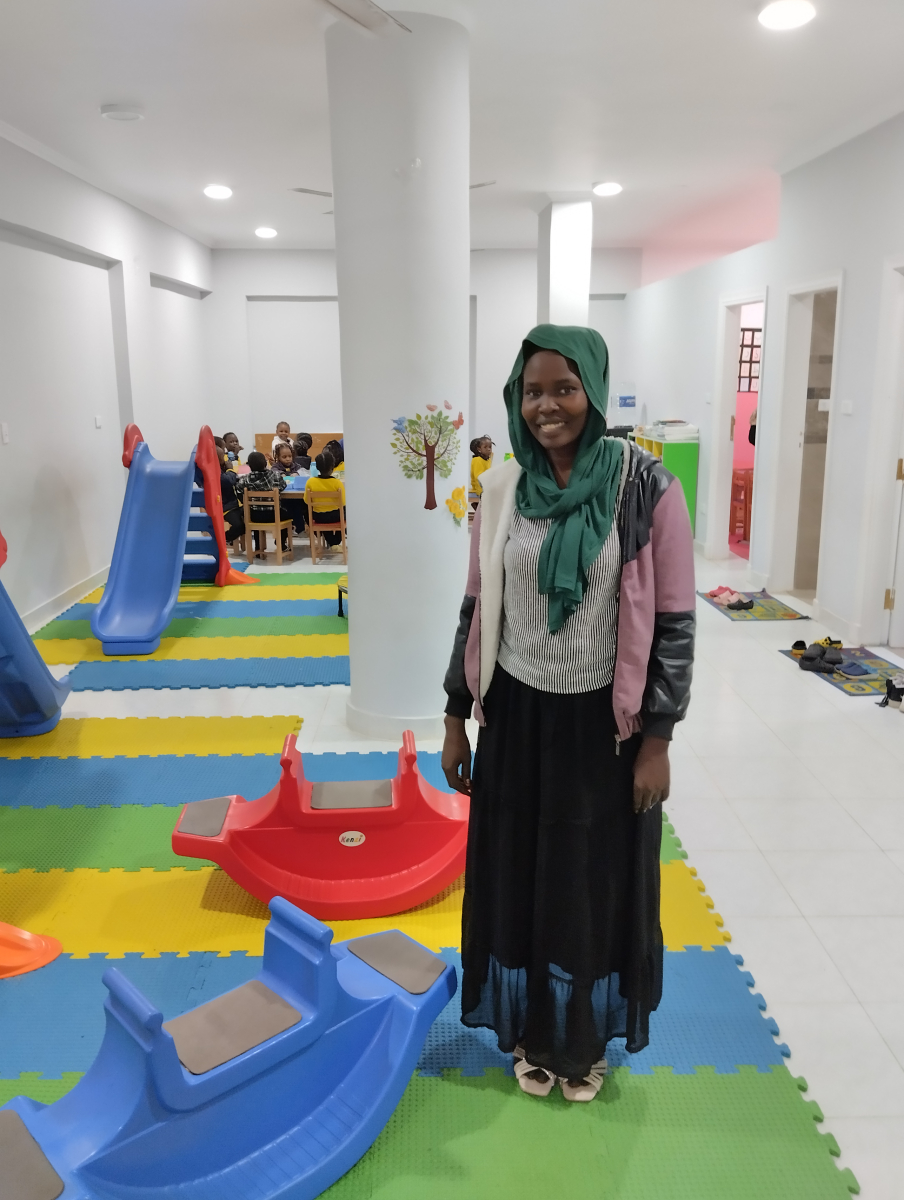
The ground floor is being developed as a community centre. As I leave, I am invited to see a hairdressing class in progress. Nadia, in charge, explains to me that apart from this being great fun for the women who have little otherwise to laugh about, it builds self-esteem and teaches a useful skill that can lead to employment. Teaching the worth of every person is a theme running through the building. An AI project that allows children to see themselves dressed in the uniform of a job they aspire to, is popular. The “My Dear Daughter” project teaches parenting skills and gently stresses that daughters are as valuable as sons. The mantra of that course is from Psalm 139: “I know that I am wonderfully made.”
One teacher tells me that despite everything, the children here can have a childhood. She said, “They are happy and they make us happy.”
You can donate here to support the work of the Diocese of Egypt