
July 20th is a special day in the Cypriot calendar.
In the internationally unrecognised 'Turkish Republic of Northern Cyprus' it is marked with huge military parades, and is framed as a celebration of how the might of Turkey liberated the Island. But in the Republic south it is marked in a much more sombre way, remembering the huge loss of life and land that occured in the face of a military operation that began on this day in 1974. In the south it is framed as an opportunist attempt by Turkey, using the excuse of political and civil instability caused by an internal coup some five days earlier, to conquer the Island. This led to the separation that still exists between north and south, marked by a so-called green line patrolled still by UN forces. Anglicans have churches on both sides of the line.
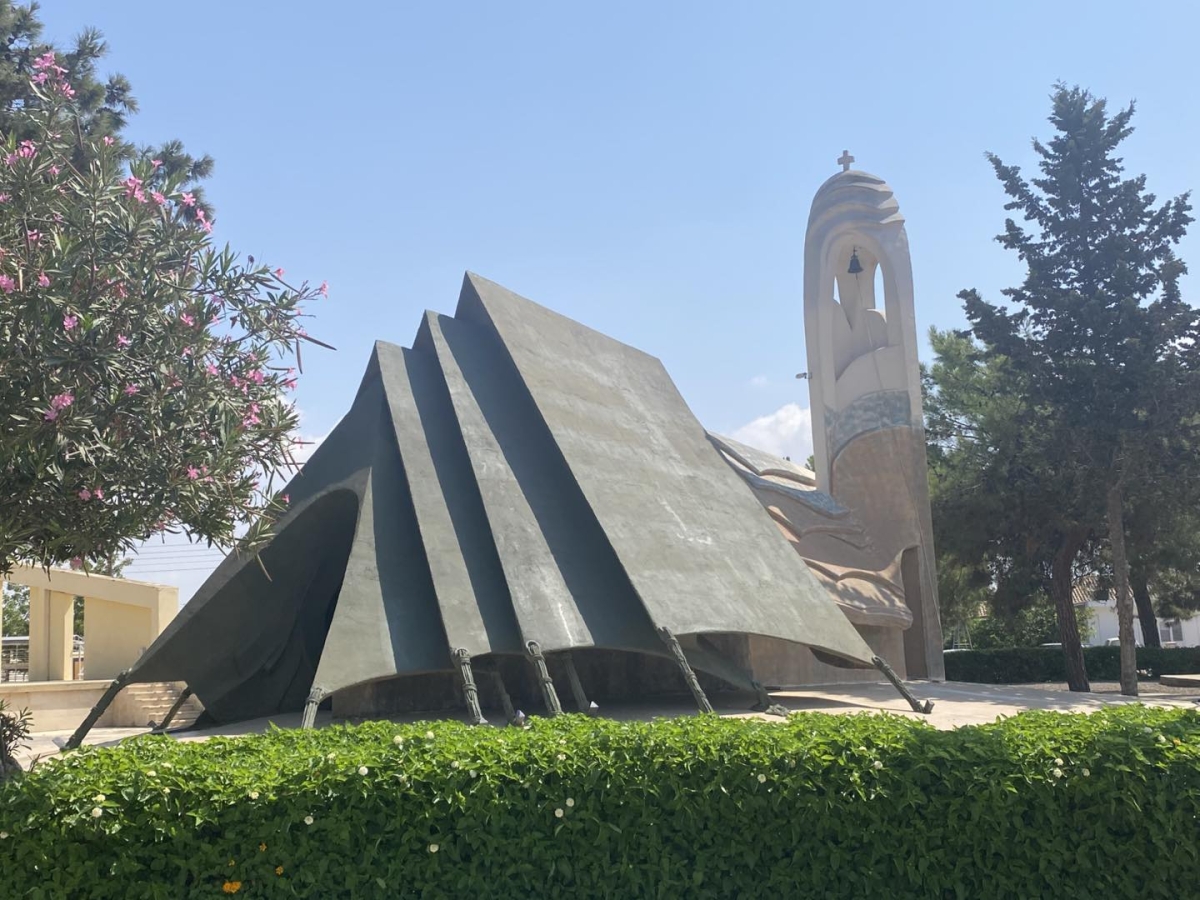
This year, in an attempt to help churchgoers to reflect on these key recent events that have formed modern Cypriot identity, Fr George Vidiakin, parish priest in Ayia Napa, organised a short pilgrimage attended by members of three congregations, to a little known monument with both civil and religious connotations, in the village of Dasaki Achnas, on the edge of the Ayia Napa Municipality: a chapel in the form of a tent.
In 1974, as the Turkish military swept across the Island, terrified villagers from the areas that stood in their path fled with what possessions they could carry. The inhabitants of the village of Achna, close to Larnaca, made for what they hoped would be the security of the British Sovereign base in Dhekelia. They found refuge in the forest area adjacent to the base. Although they were safe, life was difficult there. Living testimony is readily available. Local people speak of how they gave birth there, not knowing whether the fathers of their children, who had gone to fight, were alive or dead. Eventually some 60,000 to 80,000 people made their way there. The deserted village of Achna still exists but photography is forbidden. In the forest, where they lived for months on end, a settlement grew up called Achna Forest in English; literally Achna's little forest in the Greek, Dasaki Achnas, now a most attractive and tranquil place.
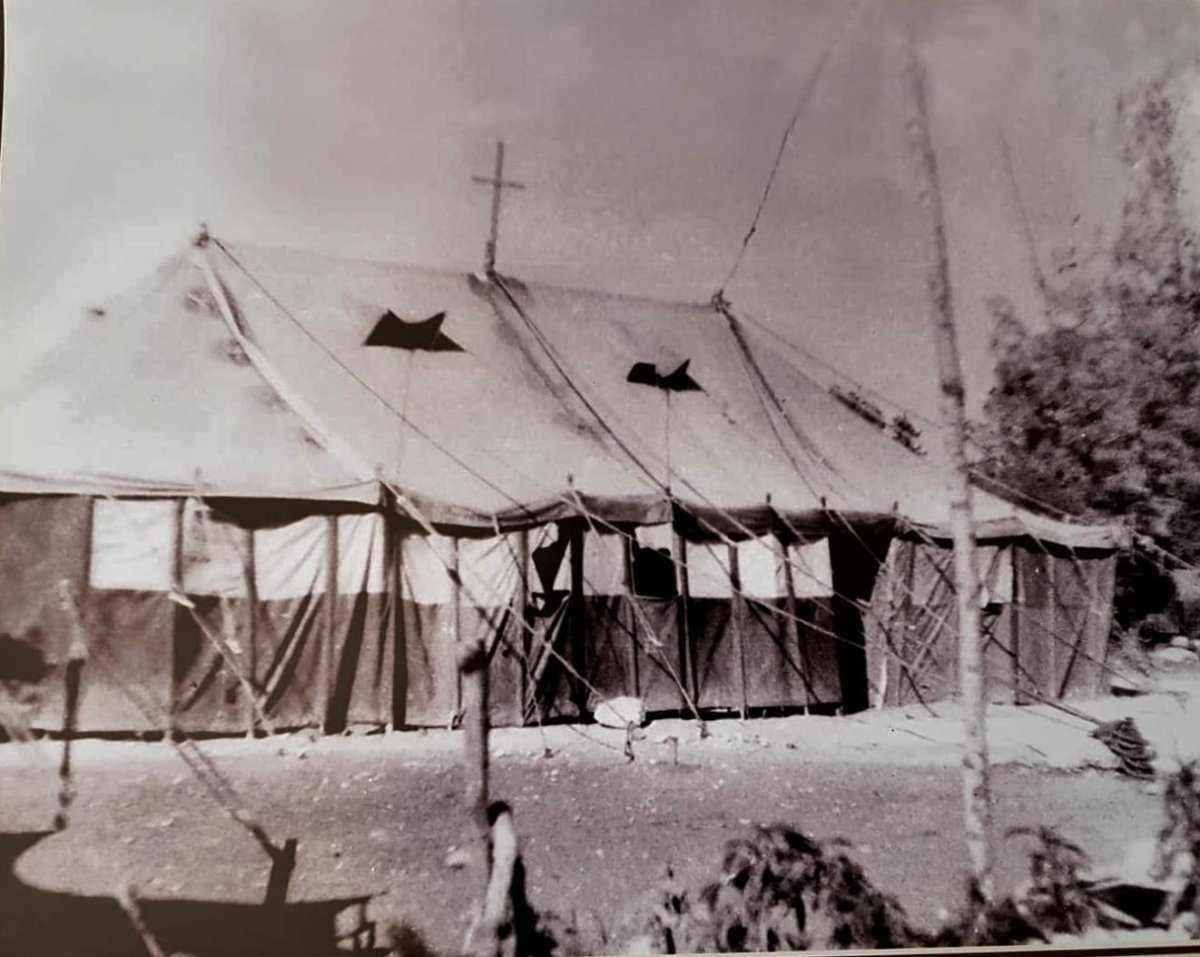
The centrepiece of this village, and the focus of the recent pilgrimage, is a chapel in the shape of a tent. Fr George told the pilgrims the story of the chapel."TheTent Memorial to Refugee-hood, also known as the ‘Chapel of St. Demetrian’, was built in 2006 and refers to the stories of the refugees who founded this settlement. Its main message is to remind people of the tents in which those fleeing from their homes under the pressure of the occupiers lived. It was in such tents in 1974 that refugees pouring out of the occupied areas of Cyprus lived. At the site of the current ‘chapel,’ a priest used to conduct services in a tent church."
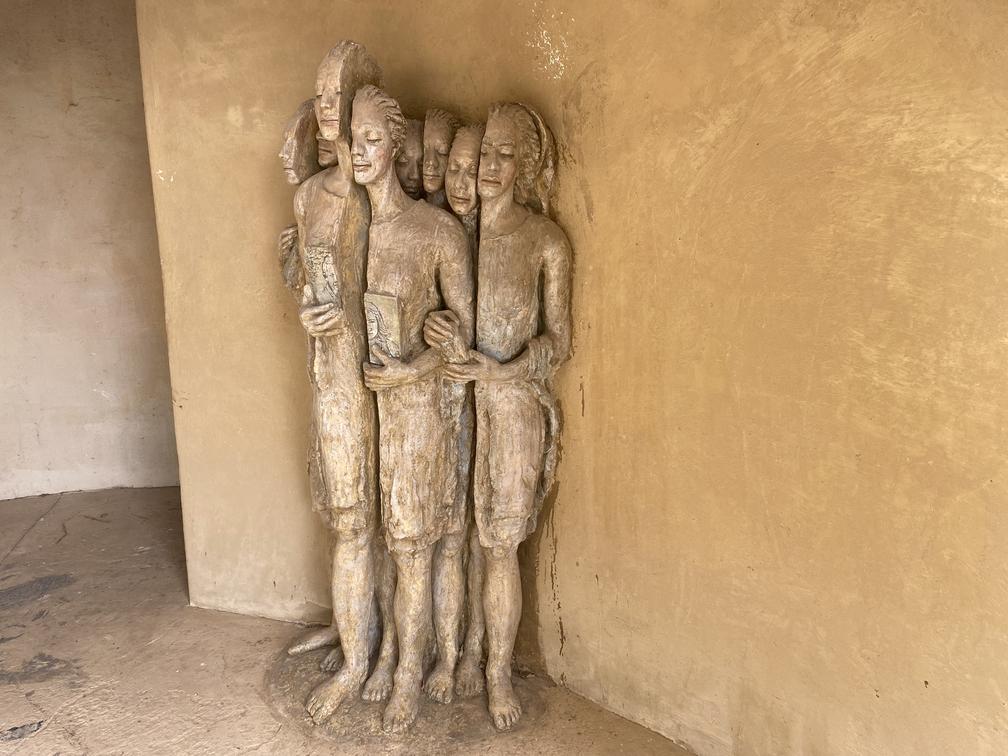
Figures sculpted within the Chapel include a striking feature at the entrance depicting a group of women apparently split in two. Even an icon that one of them is carrying is split. This sybolises the division of the Island.
Another emotive figure is of an elderly woman who may be alive or dead. A mother and child is the subject of a third sculpture. The artist, a local man, said, “I have expressed my deepest pain on the faces of these people.”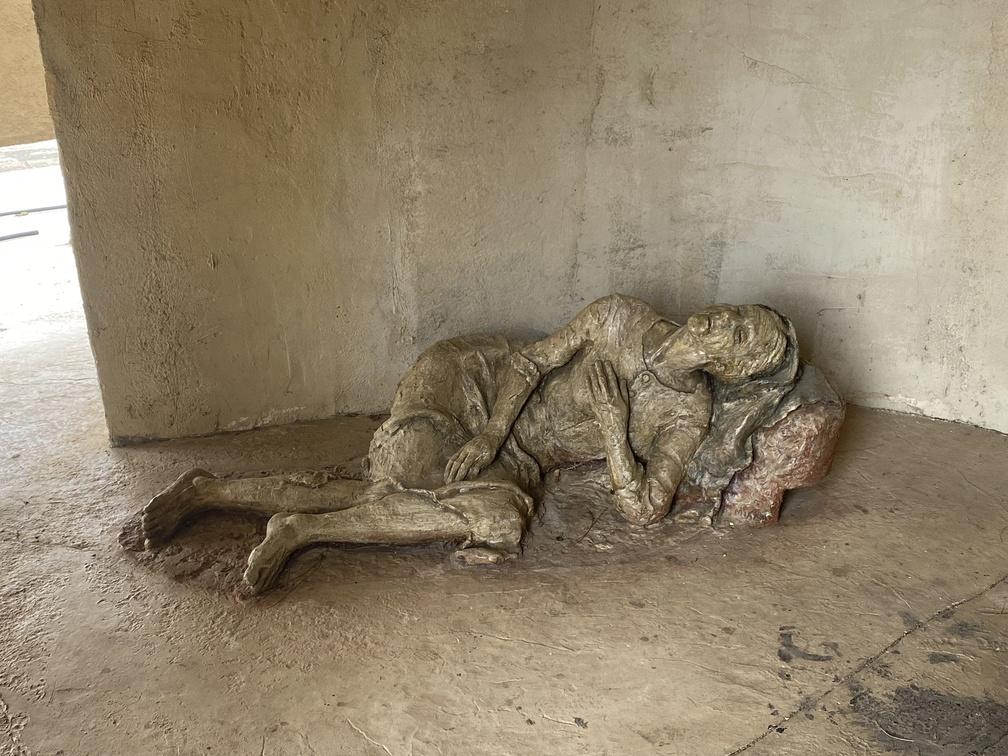
Speaking at the monument in 2023, the President of Cyprus said, "it was here that we reached out to one another and, through pain and lamentation, demonstrated love for our homeland and solidarity with our neighbour, compatriot, and refugee." Fr George comments, "What the President said is interesting in its own right because it expresses the core qualities that characterise Cypriot identity: hospitality, national pride, love for homeland, and solidarity with compatriots. These qualities come fully to life at a critical moment when the country is essentially on the brink of collapse. Thanks to them, the nation does not fall apart into pieces but instead reassembles itself under new circumstances, forging its own identity."
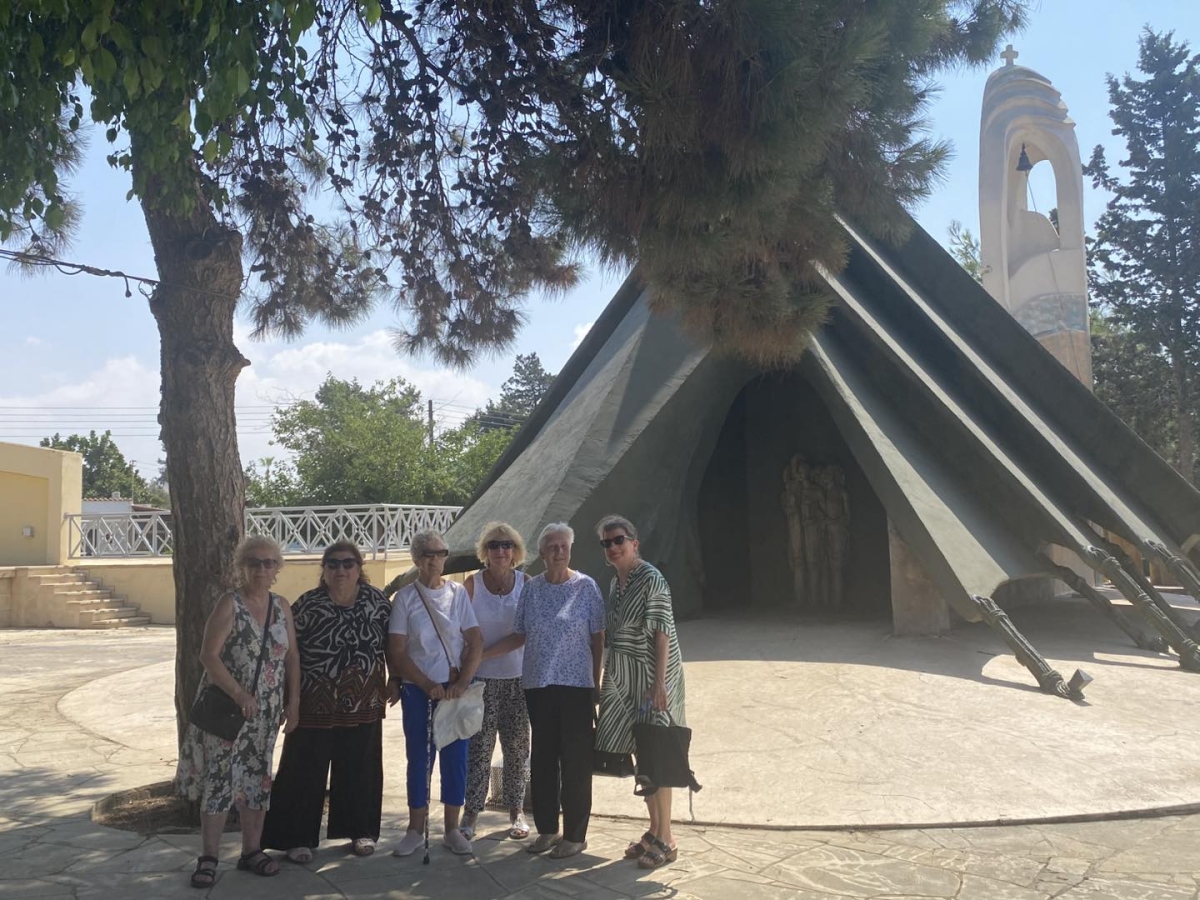
The visit made an obvious impact on those who took part. Mrs Margaret Charalambides from Nicosia said, "The sculptures of the people who are presented as cut in half was the most moving. I felt that the one half was of a person longing and hoping to return home, which was no longer possible ,and the other half looking forward to an uncertain future,which must be a terrible feeling." More infomration about the history of the Chapel can be found at:https://dom.com.cy/en/live/blog/dasaki-akhnas-the-point-of-national-reas....